
How to Choose the Right Drone Light Show System: Key Features & Must-Have Tech
By Antonio Liska •
Imagine a night sky transformed into a living canvas, hundreds of glowing drones dancing in perfect harmony, spelling out messages, forming intricate shapes, or reenacting iconic scenes. Drone light shows have rapidly evolved from novelty acts to mainstream entertainment, replacing traditional fireworks at major events, brand launches, and even weddings. But with this surge in popularity comes a critical question: how do you choose the right drone light show system that delivers reliability, safety, and jaw-dropping visuals?
Whether you’re an event planner, a creative agency, or a tech-savvy entrepreneur looking to launch your own drone show business, selecting the right equipment is the foundation of your success. Not all systems are created equal. In this guide, we’ll walk you through the essential features, must-have technologies, and practical considerations that separate professional-grade setups from underwhelming kits.
What Should You Look for in a Drone Light Show System?
At its core, a drone light show system isn’t just about drones with LEDs. It’s a tightly integrated ecosystem of hardware, software, and safety protocols working in unison. Here’s what truly matters:
- Precision GNSS Positioning: Without centimeter-level accuracy, drones can’t maintain tight formations or execute complex choreography. Systems like the RoboDot Touch RTK GNSS, used in Robota’s RoboGlow platform, provide real-time kinematic (RTK) positioning that ensures each drone knows its exact location, even in dense urban environments.
- Synchronized Flight Control: Every drone must move in perfect sync. This requires a centralized ground control station that can manage hundreds or even thousands of drones simultaneously with minimal latency.
- High-Brightness, Programmable LEDs: The visual impact hinges on lighting. Look for RGB LEDs with high luminance that remain visible even under moonlight or city glow. Full-color programmability allows for millions of color combinations and dynamic effects.
- Fail-Safe Mechanisms: Redundant communication links, geofencing, automatic return-to-home, and emergency landing protocols are non-negotiable for public safety and regulatory compliance.
- Weather Resistance: Professional shows often run in less-than-perfect conditions. Drones should be rated for light rain and wind resistance (typically up to 10–15 mph).
How Many Drones Do You Need for a Light Show?
The number isn’t just about scale, it’s about storytelling. A simple logo might require only 50 drones, while a full narrative sequence (like a phoenix rising or a galaxy unfolding) could need 300 or more.
That said, more drones don’t automatically mean a better show. What matters is how intelligently they’re used. A well-designed 100-drone show with smooth transitions and rich animations will outshine a cluttered 500-drone display with poor choreography.
When evaluating a drone light show kit, consider scalability:
- Can the system support your current needs and future growth?
- Is it modular, allowing you to add drones without overhauling your entire setup?
- Does the software handle both small and large formations seamlessly?
Robota’s RoboGlow solution, for example, is designed for flexibility, supporting everything from intimate 20-drone performances to large-scale spectacles with synchronized audio and 3D animation layers.
What Software Features Are Essential for Creating Drone Light Shows?
Hardware gets the drones in the air, but software brings them to life. The best drone light show systems come with intuitive, powerful software that empowers creators, not engineers.
Key software capabilities include:
- 3D Animation Preview: Visualize your show in a virtual environment before launch. This helps catch timing issues, collisions, or visual gaps early.
- Drag-and-Drop Timeline Editing: No coding required. Build and refine drone sequences using an intuitive, visual interface, easily arranging movements, adjusting colors, and syncing effects to music.
- Real-Time Monitoring: During the show, operators need live telemetry, battery levels, GPS status, signal strength for every drone in the swarm.
- Automated Pre-Flight Checks: Safety starts on the ground. Good software runs diagnostics on all units before takeoff, flagging any anomalies.
- Local Show Library & Data Ownership: Keep all show files securely on your own systems. Maintain full control over your designs while organizing, reusing, and refining past performances without relying on cloud storage.
Importantly, the software should integrate smoothly with third-party tools, whether it’s importing vector graphics from Adobe Illustrator or syncing with professional audio mixing boards.
Are There Ready-to-Use Drone Light Show Kits Available?
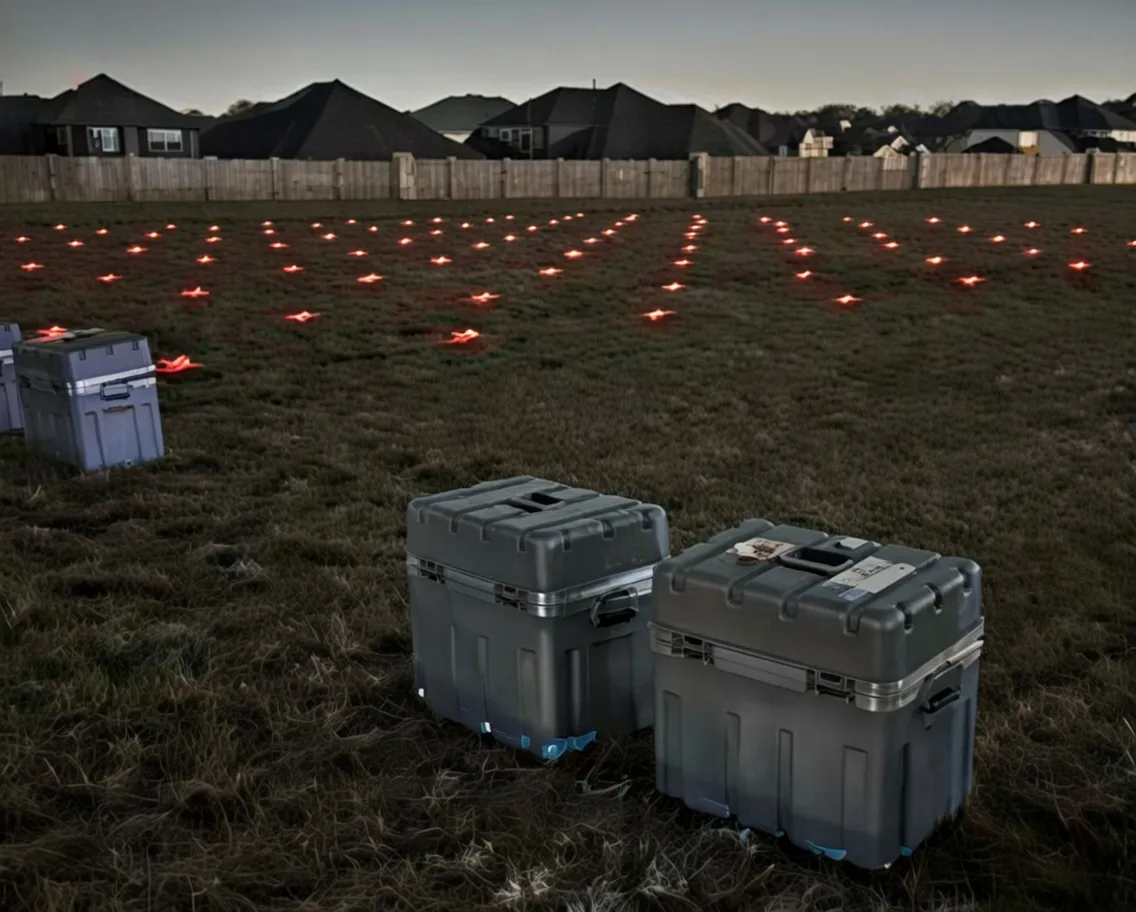
Yes, and they’re a smart starting point for newcomers. A complete drone light show kit typically includes:
- Light-capable drones available in standardized batches of 20 units
- Ground control station (laptop or dedicated hardware)
- RTK base station for precise positioning
- Transport cases and charging stations
- Licensing for the show creation software
However, not all kits are turnkey. Some require significant technical setup or lack regulatory documentation needed for commercial operations. Always verify:
- Whether the kit provides flight logging and documentation tools that support the FAA waiver application process
- If firmware updates and technical support are included
- Whether training is provided for operators and animators
Robota’s approach with RoboGlow emphasizes ease of deployment without sacrificing professional control. Their ecosystem is built for users who want to focus on creativity, not troubleshooting comms failures mid-show.
What Safety and Regulatory Considerations Should You Keep in Mind?
Flying drones over people, especially in large numbers, is heavily regulated. In the U.S., you’ll likely need a Part 107 waiver from the FAA. In Europe, operational authorizations under EASA Class C1 or C2 rules apply.
Your drone light show system must support compliance by offering:
- Built-in altitude and geofence limits
- Remote ID broadcasting (waiver-capable, where applicable)
- Detailed flight data logging for post-mission review
- Emergency stop functionality accessible to multiple team members
Never underestimate the importance of redundancy. Professional systems use dual-band communication (e.g., 2.4, 5 GHz + 900 MHz) to maintain control if one frequency gets jammed or interfered with.
Also, always conduct site surveys beforehand. Tall buildings, power lines, or RF interference from nearby venues can disrupt GNSS signals, making RTK correction from a local base station essential for stability.
Why Precision Matters: The Role of RTK GNSS in Light Shows
This is where many budget systems fall short. Standard GPS offers ~3-meter accuracy, fine for mapping, but disastrous for light shows where drones fly just meters apart.
RTK (Real-Time Kinematic) GNSS, like the technology in Robota’s RoboDot Touch, delivers centimeter-level precision by comparing signals from a fixed base station and the moving drones. This allows for:
- Tighter formations (drones can safely fly closer together)
- Smoother, more fluid animations
- Reliable performance even near reflective surfaces or in urban canyons
Without RTK, your show risks “jitter”, where drones wobble slightly in place, ruining the illusion of a solid, animated shape in the sky.
Final Thoughts: Invest in Quality, Not Just Quantity
A drone light show is only as good as the system behind it. Cutting corners on positioning accuracy, software usability, or safety features might save money upfront, but it risks show cancellations, regulatory fines, or worse, accidents.
If you’re serious about delivering unforgettable aerial experiences, choose a drone light show system built on proven technology, backed by responsive support, and designed for real-world reliability.
Ready to Light Up the Sky?
Whether you’re producing your first community event or scaling a global drone entertainment company, the right tools make all the difference. Explore Robota’s RoboGlow platform, a complete, professional-grade drone light show kit engineered for precision, creativity, and safety.
Contact us to request a demo, download technical specs, or speak with our team about building your custom light show solution. The future of night skies is bright, and it’s powered by intelligent, synchronized drones. Don’t just watch the show, create it.
Put centimeter accuracy to work
See the RoboDot Touch RTK receiver or talk to us about your surveying and mapping workflow.